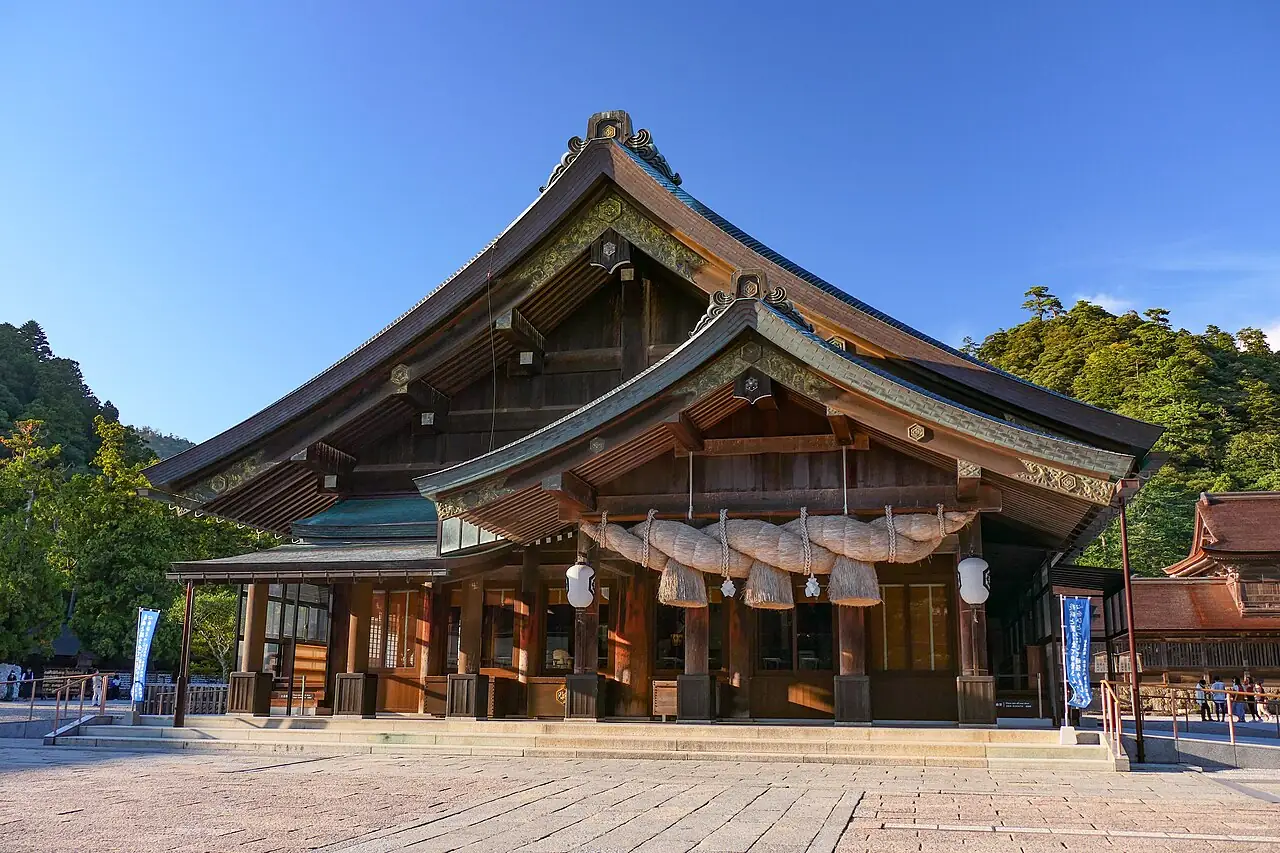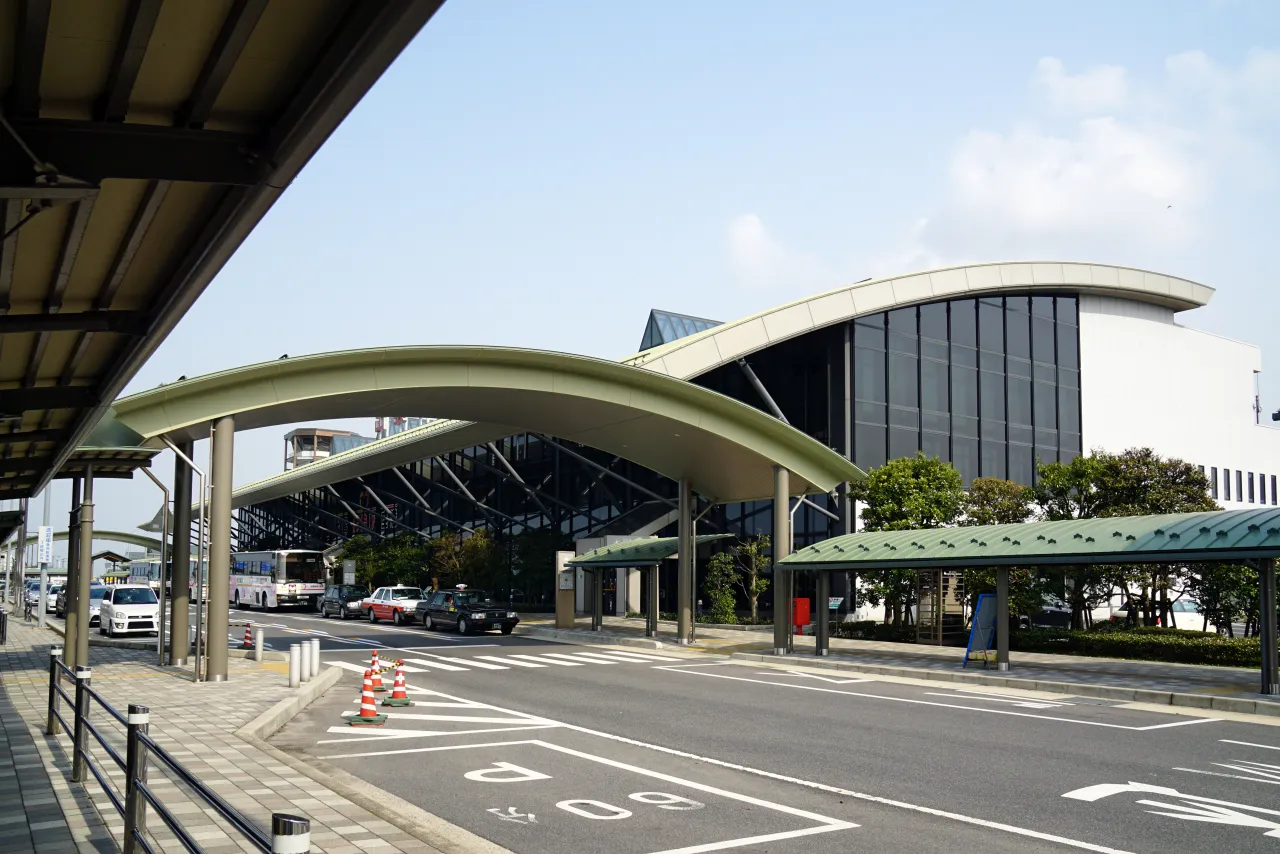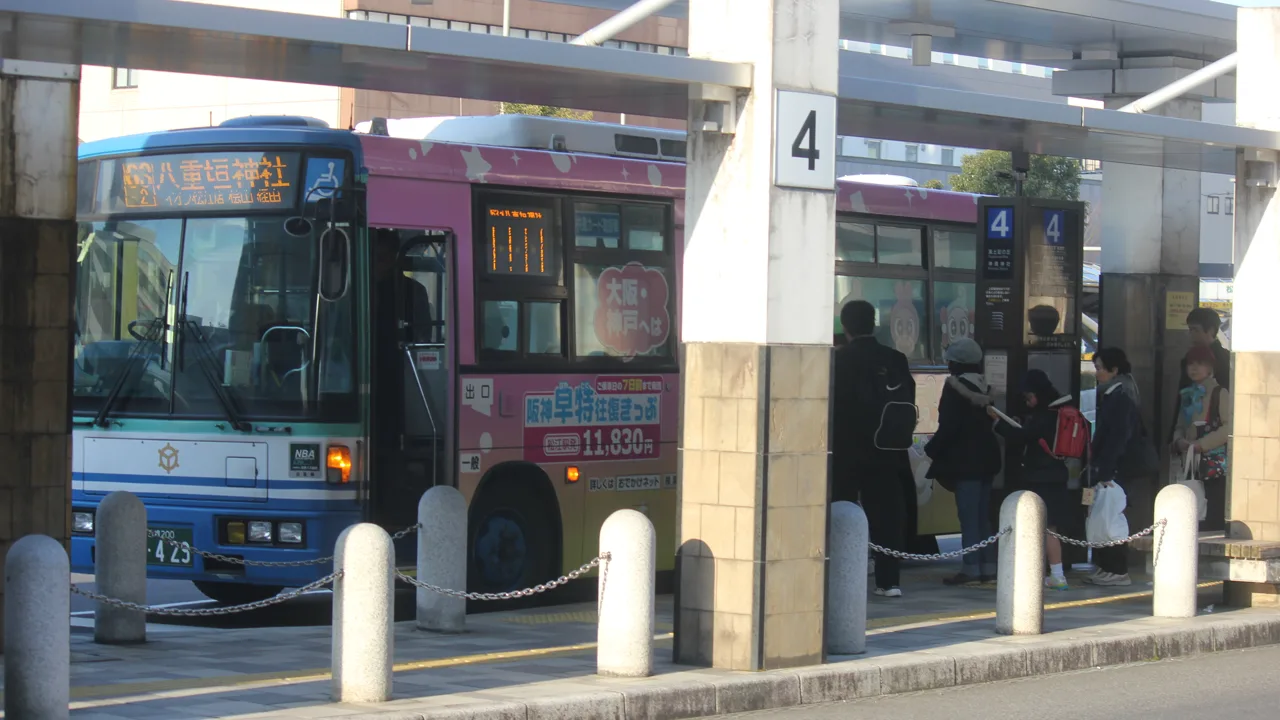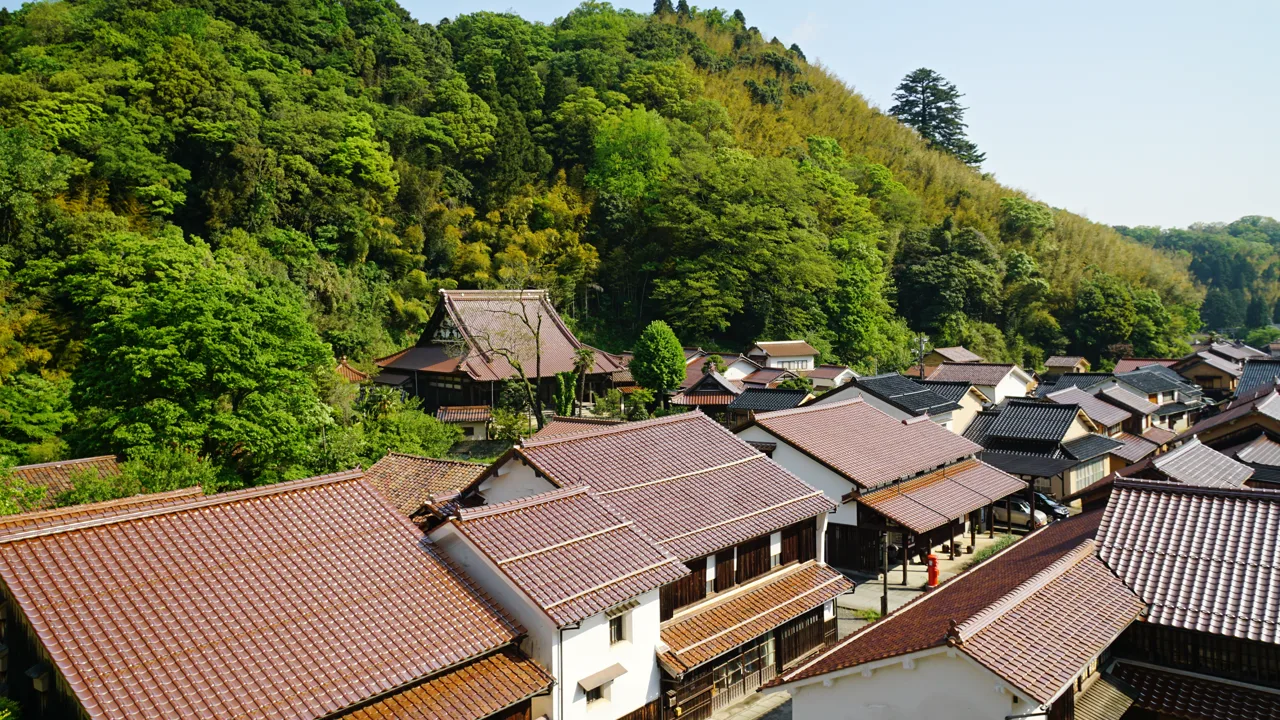
The Iwami Ginzan, Yunotsu Onsen and Nima area explores central Shimane Prefecture's UNESCO World Heritage landscape—linking the 16th-century silver-mining valley of Omori and Ryugenji Mabu Mine Shaft with the world's largest one-year hourglass inside Nima Sand Museum's glass pyramids, the "singing sands" of Kotogahama Beach, and the preserved silver-shipping hot-spring port of Yunotsu Onsen. Thanks to expanding toll-free stretches of the San-in Expressway, the entire heritage coast sits just 50–60 minutes southwest of Izumo Taisha and about 1 hour 25 minutes west of JR Matsue Station, forming a natural bridge between eastern Shimane and western Yamaguchi (Tsuwano and Hagi).
This guide maps out a 43 km route connecting all three towns while explaining mandatory year-round Park & Ride rules for Omori Street, the October 2026–March 2027 exhibition renovations at the Iwami Ginzan World Heritage Center and Kumagai Residence, and narrow-lane parking etiquette in Yunotsu Onsen.
Map of the Iwami Ginzan Silver Mine, Yunotsu Onsen and Nima Sand Museum area
- World Heritage, hot-spring town and coast
- Roadside stations
- 1Michi-no-Eki Road Ginzan
- 2Iwami Ginzan World Heritage Center (P&R)
- 3Iwami Ginzan Park & Omori Street Entrance
- 4Nima Sand Museum & Michi-no-Eki Goise Nima
- 5Kotogahama Singing-Sand Beach
- 6Yunotsu Onsen (Yakushiyu & Motoyu)
- 7Yunotsu Pottery Village (Climbing Kiln)
- 8Michi-no-Eki Kirara Taki
Line: 1 → 2 → 3 → 4 → 5 → 6
The map could not be loaded. Use the junction-by-junction directions below.
The line follows the main heritage route below, "First visit: Iwami Ginzan Park & Ride, Nima Sand Museum and Yunotsu Onsen". Numbers mark the stops: green for World Heritage, hot-spring town and coast, blue for roadside stations. Marker 7 (Yunotsu Pottery Village) lies 3 minutes inland from Marker 6 (Yunotsu Onsen), while Marker 8 (Michi-no-Eki Kirara Taki) marks a popular sunset beach stop on Route 9 when approaching from Izumo. Tap a marker to see its name.
Recommended drives
First visit: Iwami Ginzan Park & Ride, Nima Sand Museum and Yunotsu Onsen
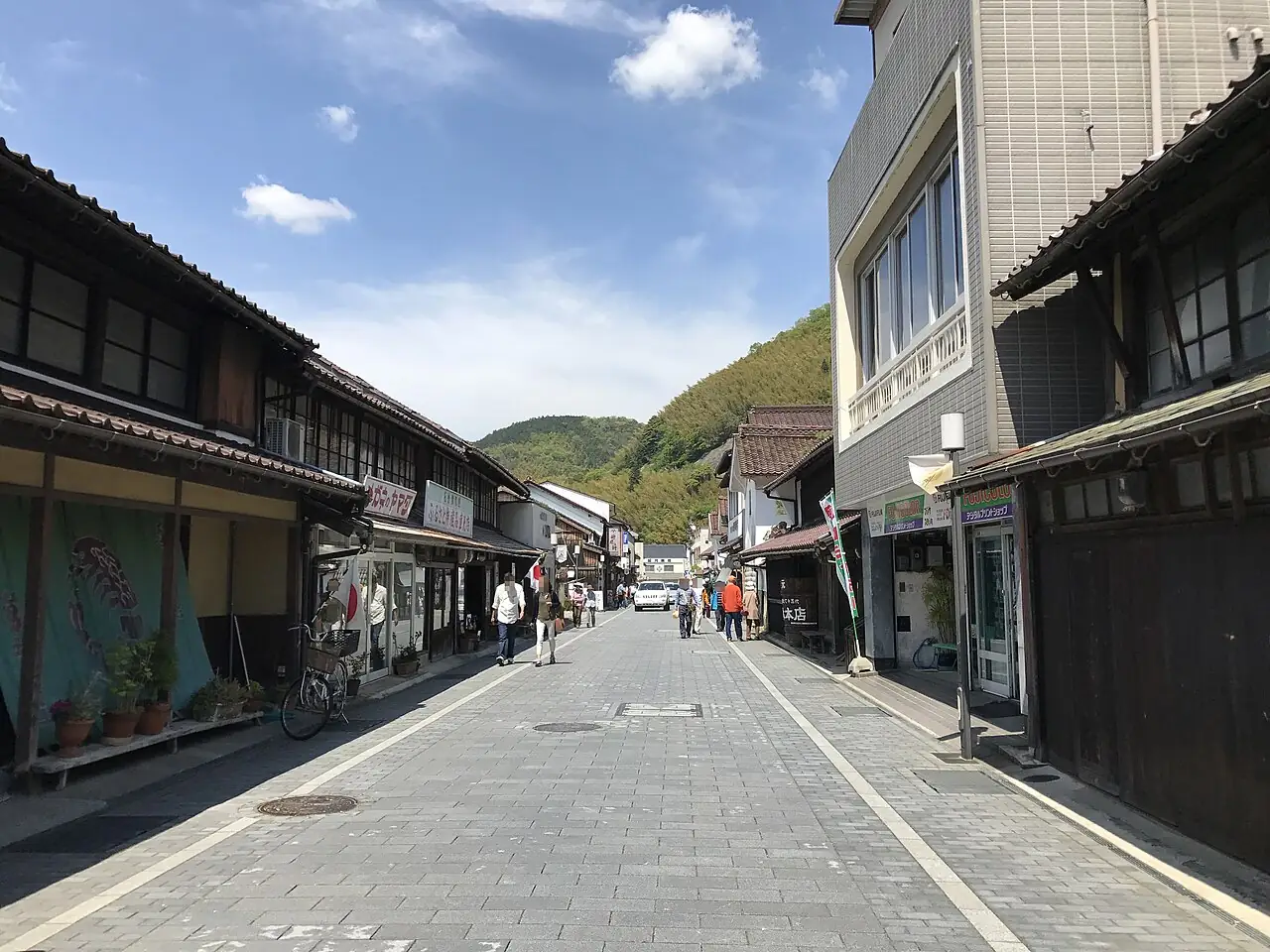
Approaching from Izumo or Matsue along National Route 9 (optionally pausing at Michi-no-Eki Kirara Taki (8)), pass sea-facing Michi-no-Eki Road Ginzan (1) in Oda and turn inland 15 minutes to park free at the Iwami Ginzan World Heritage Center (2) (~400 spaces). Board the local shuttle bus (5–8 minutes) into the restricted valley at Iwami Ginzan Park & Omori Street Entrance (3) to walk past red Sekishu-tiled samurai houses, merchant cafés and shrines—and rent a power-assisted bicycle (or walk 35–45 minutes up the wooded valley trail) to enter the hand-chiselled Edo-period silver drift at Ryugenji Mabu.
Back at your car in the afternoon, drive 12 minutes northwest on Prefectural Route 31 to Nima Sand Museum & Michi-no-Eki Goise Nima (4) to see the 5.2-metre, one-tonne Sunagoyomi year-long hourglass inside six glass pyramids and browse local Oda produce next door. Continue 5 minutes west to Kotogahama Singing-Sand Beach (5), where dry quartz sand squeaks underfoot along a 1.8 km crescent bay, then hop onto the toll-free San-in Expressway (Nima-Iwami-Ginzan IC to Yunotsu IC) for 12 minutes southwest to soak in 1,300-year-old un-diluted hot springs at Yunotsu Onsen (6) and visit the climbing kilns at Yunotsu Pottery Village (7).
From Michi-no-Eki Road Ginzan through the World Heritage Center, Nima and Kotogahama to Yunotsu Onsen totals 43.2 km, or about 55 minutes of pure driving time (excluding shuttle buses, 2.5–3.5 hours exploring Iwami Ginzan and hot-spring baths). All surface roads and the local San-in Expressway sections on this route are toll-free.
Mandatory year-round Park & Ride for Iwami Ginzan (Omori Street)
Private and rental cars are prohibited year-round from driving into Iwami Ginzan's historic Omori Street and the mine-shaft valley toward Ryugenji Mabu in order to protect narrow residential lanes. Do not set your car sat-nav directly to Omori Daikansho-ato or Ryugenji Mabu; instead, always set your destination to the Iwami Ginzan World Heritage Center (0854-89-0183).
Leave your rental car in the World Heritage Center's free ~400-space car park and ride the Iwami Kotsu local bus from the terminal stop outside the entrance down to Omori or Omori Daikansho-ato (5–8 minutes). Right beside the bus stop at Iwami Ginzan Park, rental-cycle shops hire out electric-assist bicycles that turn the gentle 2.3 km uphill valley path to Ryugenji Mabu into an easy 15-minute ride each way.
October 2026–March 2027 renewal closures at the World Heritage Center and Kumagai Residence
Visitors travelling between autumn 2026 and spring 2027 should note two scheduled renovation closures ahead of Iwami Ginzan's 20th UNESCO anniversary:
- Iwami Ginzan World Heritage Center paid exhibition rooms are closed from 1 October 2026 through 31 March 2027 for display renewal. Crucially, the building's free information counter, restrooms, ~400-space car park and Park & Ride bus stop remain open (8:30–17:30).
- Kumagai Residence (an Important Cultural Property merchant house on Omori Street) is also closed for conservation and exhibition work from October 2026 through late March 2027.
Omori Street itself—including Omori Daikansho-ato, historic cafés and bakeries, Kanzeon-ji, Rakan-ji's 500 stone statues and Ryugenji Mabu Mine Shaft—remains open as normal throughout this period.
Roads you can drive
| Road | What to expect | Length and cost | Hours and restrictions |
|---|---|---|---|
| San-in Expressway (Izumo-Taki IC – Oda-Chuo Sanbesan IC; Nima-Iwami-Ginzan IC – Yunotsu IC – Iwami-Fukumitsu IC) | Signal-free expressway bypasses linking Izumo, Oda, Nima and Yunotsu | Completely toll-free on these central/western Shimane sections | Open year-round; mostly single-carriageway two-way traffic—observe speed limits and winter wind/snow advisories |
| National Route 9 (Kirara Taki – Oda – Nima – Yunotsu Coast) | Main Sea of Japan coastal trunk highway with dramatic sunset cliffs between Izumo-Taki and Oda | About 17 km from Michi-no-Eki Kirara Taki to Michi-no-Eki Road Ginzan; toll-free | Open year-round |
| Prefectural Routes 46 & 31 (Oda / Nima-Iwami-Ginzan IC – World Heritage Center) | Valley approach roads leading directly to the Park & Ride hub | About 6.5 km and 10 minutes from Nima-Iwami-Ginzan IC to the World Heritage Center; toll-free | Open year-round; stop at World Heritage Center (do not enter restricted Omori Street by car) |
Road width, ditches, carsickness, night driving and motorcycles
Check monthly status on Atlas →Pre-drive safety summary compiled from official road-restriction records and route-map (OSRM) curvature metrics (editorial synthesis from public records, not an on-site road test).
| Safety check | What to expect and how to plan |
|---|---|
| Road width and roadside ditch risk | Roadside ditch risk: Moderate (narrow approaches in parts). Main corridors are generally two-lane, but stay alert for roadside kerbs and drainage channels on older mountain or coastal access lanes. |
| Curve density, carsickness and rest stops | Route-map (OSRM) curvature measures approx. 131°/km (7.5 sharp bends per 10 km); carsickness risk is rated Low (gentle alignment). Use stops along the route such as Michi-no-Eki Road Ginzan, Iwami Ginzan World Heritage Center, Iwami Ginzan Park & Omori Street Entrance, Nima Sand Museum & Michi-no-Eki Goise Nima to break up driving stretches and let passengers stretch. |
| Daytime, night driving and seasonal weather | Best driven in daylight for clear visibility—mountain and coastal stretches often lack street lighting and can see sudden fog or wildlife after sunset. (Open year-round for standard rental cars.) |
| Motorcycles: access rules and riding notes | Generally open to motorcycles on public highways, though individual scenic toll roads, bypasses or night stretches can restrict two-wheelers—verify local signs before entering. |
Places to stop
World Heritage, hot-spring town and coast
Numbers match the map.
| No. | Place | Parking | What to know |
|---|---|---|---|
| 2 | Iwami Ginzan World Heritage Center (Park & Ride Hub) | ~400 spaces (free) | Mandatory parking and shuttle-bus hub for Iwami Ginzan (8:30–17:30). Paid exhibition halls closed 1 Oct 2026 – 31 Mar 2027 for renewal; free lobby guidance, toilets and Omori bus stop operate normally |
| 3 | Iwami Ginzan Park, Omori Street & Ryugenji Mabu | No private/rental cars (5–8 min by bus from World Heritage Center) | Preserved Edo-period samurai/merchant street and illuminated silver mine tunnel Ryugenji Mabu (open year-round, admission charged). E-bike rentals at Iwami Ginzan Park; Kumagai Residence closed Oct 2026–Mar 2027 |
| 5 | Kotogahama Singing-Sand Beach | Signed visitor spaces near the beach access (follow narrow-lane signs) | 1.8 km Natural Monument beach whose dry quartz sand chirps musically underfoot (best on dry sunny days) |
| 6 | Yunotsu Onsen (Yakushiyu & Motoyu) | Public visitor parking at harbour / town entrance (no street parking on the narrow bathhouse lane) | Only hot-spring town in Japan inscribed within a UNESCO World Heritage site. Soak in mineral-rich 100% natural spring water at Yakushiyu (beside a wooden Taisho-era Western villa) or piping-hot Motoyu |
| 7 | Yunotsu Pottery Village (Climbing Kiln) | Free parking on site | 3 minutes from Yunotsu Onsen, showcasing massive stepped noborigama climbing kilns and traditional Iwami-yaki stoneware |
Roadside stations
| No. | Roadside station | Parking | What to know |
|---|---|---|---|
| 1 | Michi-no-Eki Road Ginzan | 46 ordinary spaces (2 disabled) + 3 large spaces (free) | Coastal Route 9 stop in Oda overlooking the Sea of Japan (9:00–19:00), handy before turning inland toward Iwami Ginzan |
| 4 | Nima Sand Museum & Michi-no-Eki Goise Nima | Museum free lot ~170 spaces + Michi-no-Eki 113 ordinary & 18 large spaces (free) | Right beside San-in Expwy Nima-Iwami-Ginzan IC. Sand Museum opens 9:00–17:00 (last entry 16:30, closed Wed, adults ¥800). Adjacent Michi-no-Eki Goise Nima opens 9:00–18:00 with local seafood & EV quick charger |
| 8 | Michi-no-Eki Kirara Taki | 155 ordinary spaces (4 disabled) + 8 large spaces (free) | Oceanfront stop on Route 9 between Izumo Taisha and Oda (9:00–18:30), famous for sunset views over Kirara Beach and local Taki fig soft-serve |
Best seasons and crowds
| Season | Highlights and cautions |
|---|---|
| Late March–May | Fresh green maples along the Ginzan River cycle path and mild coastal winds. Arrive at the World Heritage Center by 9:00 during Golden Week before e-bike rentals sell out |
| June–September | Bright blue Sea of Japan views at Kirara Beach and Kotogahama; Ryugenji Mabu tunnel stays naturally cool (~15 °C) even in midsummer |
| October–November | Warm red Sekishu roof tiles framed by autumn foliage and atmospheric evening bathhouse strolls in Yunotsu Onsen (note the Oct 2026–Mar 2027 indoor exhibition renewals) |
| December–early March | Steaming winter bathhouses and seasonal snow crab along the San-in coast; fit winter snow tyres from mid-December through early March for inland frost and snowfall |
Closures, suspensions and traffic restrictions checked on 15 November 2026
- Iwami Ginzan (Omori Street & Ginzan Mine Zone) enforces year-round private-car restrictions—park free at the Iwami Ginzan World Heritage Center and transfer to the shuttle bus.
- Iwami Ginzan World Heritage Center paid exhibition rooms are closed from 1 October 2026 to 31 March 2027 for renewal, and Kumagai Residence in Omori is closed from October 2026 to late March 2027 (free guidance, restrooms, Park & Ride buses, Omori Street shops and Ryugenji Mabu remain open).
- Nima Sand Museum closes every Wednesday (or Thursday if Wednesday is a holiday) and over New Year holidays (except its special New Year's Eve midnight hourglass turn).
- National Route 9 and the toll-free San-in Expressway sections around Oda, Nima and Yunotsu have no full-day road closures as of 15 November 2026.
Getting there and fuel
| Starting point | Approximate drive |
|---|---|
| Izumo Enmusubi Airport (IZO) | Via Route 9 & toll-free San-in Expressway: about 32 km and 38 minutes to Michi-no-Eki Kirara Taki, and about 56 km and 1 hr 05 min to Iwami Ginzan World Heritage Center |
| Izumo Taisha / JR Izumoshi Station | Via toll-free San-in Expressway (Izumo-Taki IC): about 42 km and 52 minutes to Iwami Ginzan World Heritage Center, or about 45 km and 50 minutes to Nima Sand Museum |
| JR Matsue Station | Via San-in Expressway & Route 9: about 82 km and 1 hr 25 min to Iwami Ginzan World Heritage Center |
| Masuda / Tsuwano / Hagi (West) | Via Route 9 & toll-free San-in Expressway: about 72 km and 1 hr 10 min east from Masuda to Yunotsu Onsen |
Petrol stations cluster along National Route 9 in central Oda and near Nima, whereas stations inside Omori Valley and Yunotsu close early—top up on Route 9 in Oda before heading into the hills. EV rapid chargers operate at Michi-no-Eki Goise Nima and Michi-no-Eki Kirara Taki.
If you don't have a car
Because rail-to-bus connections between Iwami Ginzan, Nima and Yunotsu are infrequent, picking up a rental car in eastern Shimane saves hours. Arriving by air, compare terminal counters in Izumo Airport Car Rental; arriving by Yakumo / Sunrise Izumo limited express or touring Lake Shinji first, compare all 8 South and North Exit branches in Matsue Station Car Rental and browse the Shimane car rental directory. Driving one-way west through Tsuwano and Hagi to Shin-Yamaguchi or Yamaguchi Ube Airport, check One-Way Car Rental in Japan, ETC Cards for Rental Cars in Japan and driving in Japan on a foreign licence.
Frequently asked questions
Can I drive my rental car directly into Omori Street or up to Ryugenji Mabu Mine Shaft?
No—private and rental cars are prohibited year-round inside Omori and the mine valley. Set your sat-nav to the Iwami Ginzan World Heritage Center, park free (~400 spaces), and ride the 5–8 minute local bus to Omori or Omori Daikansho-ato, then walk or rent an e-bike for the 2.3 km valley trail to Ryugenji Mabu.
Can I still visit Iwami Ginzan during the October 2026–March 2027 World Heritage Center renovation?
Yes. Only the paid indoor exhibition halls at the World Heritage Center (and Kumagai Residence in Omori) are closed from October 2026 through March 2027. Free parking, restrooms, visitor guidance, shuttle buses, Omori Street's historic cafés and Ryugenji Mabu Mine Shaft all operate normally.
Where should I park in Yunotsu Onsen?
Yunotsu Onsen's historic bathhouse street is a single narrow lane where street parking is impossible. Leave your rental car in the signed public visitor car parks by Yunotsu Harbour or the town entrance and walk 3–8 minutes to Yakushiyu and Motoyu.
Can I combine Izumo Taisha and Iwami Ginzan in a single day?
Yes. Toll-free sections of the San-in Expressway connect Izumo Taisha to the Iwami Ginzan World Heritage Center in about 50–55 minutes, making it straightforward to visit Izumo Taisha in the morning and spend the afternoon at Iwami Ginzan, Nima Sand Museum and Yunotsu Onsen.
Do I need snow tyres in winter for Iwami Ginzan?
From mid-December through early March, yes. While coastal Route 9 sees less snow than mountain passes, inland roads around Omori Valley and expressway bridges freeze during cold snaps—major rental branches at Matsue Station and Izumo Airport equip snow tyres as standard during winter.
Nearby areas and guides
- Izumo and Matsue driving guide: Izumo Taisha, Cape Hinomisaki, Matsue Castle and Lake Shinji
- Hagi and Tsuwano driving guide: castle town, samurai lanes and Sea of Japan coast
- Tottori Sand Dunes, Uradome Coast and Mount Daisen driving guide
- Matsue Station Car Rental: South & North Exit Branches Compared
- Izumo Airport Car Rental: Terminal Counters, Hours & Rates
- Shimane driving and travel guide
Sources & photo creditsLast verified 2026-11-15
- Iwami Ginzan World Heritage Center: Official website and 2026–2027 exhibition renewal notice · 2026-11-15
- Iwami Ginzan World Heritage Center: Access and Park & Ride guide (official page, in Japanese) · 2026-11-15
- Oda City Official Tourism (Ginzan-WM): Iwami Ginzan, Yunotsu and Nima guide · 2026-11-15
- Oda City Official Tourism: Iwami Ginzan private-car restriction and Park & Ride rules (in Japanese) · 2026-11-15
- Nima Sand Museum: Official website (in Japanese) · 2026-11-15
- Nima Sand Museum: Visitor guide, hours and admission (official page, in Japanese) · 2026-11-15
- Yunotsu Onsen Yakushiyu: Official website · 2026-11-15
- National Michi-no-Eki Liaison Association: Michi-no-Eki Road Ginzan (official page, in Japanese) · 2026-11-15
- National Michi-no-Eki Liaison Association: Michi-no-Eki Goise Nima (official page, in Japanese) · 2026-11-15
- National Michi-no-Eki Liaison Association: Michi-no-Eki Kirara Taki (official page, in Japanese) · 2026-11-15
- Japan Meteorological Agency: Shimane weather forecast · 2026-11-15
- OpenStreetMap (map positions and route; © OpenStreetMap contributors, ODbL; route calculated with OSRM) · 2026-11-15
- Historic Omori townscape at the Iwami Ginzan Silver Mine. Photograph from the time it was taken; see the official sources in the article for year-round Park & Ride rules and renovation dates · Photographed 2018-05-04 · 663highland · Source · CC BY-SA 4.0