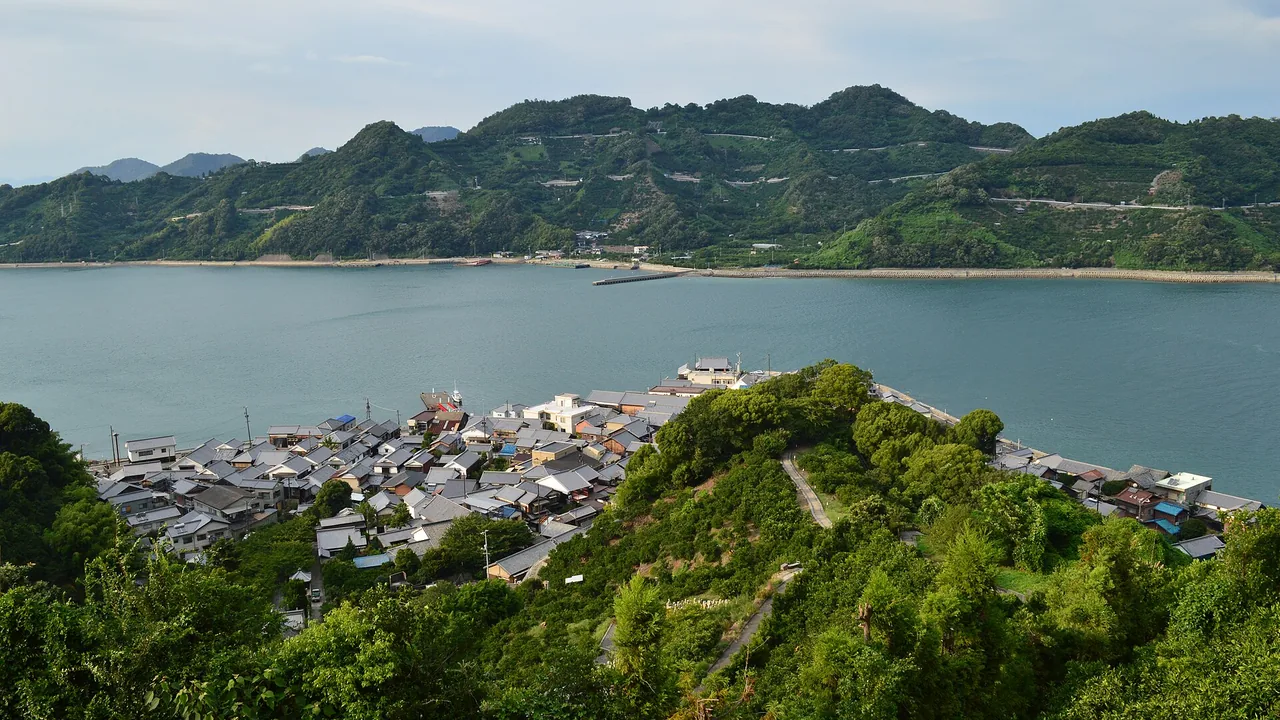
The Kure, Akinada Tobishima Kaido and Takehara area follows southern Hiroshima Prefecture's Seto Inland Sea coast from the naval harbour of Kure across seven island bridges on the Akinada Tobishima Kaido to the Edo-period tide-waiting port of Mitarai on Osaki-Shimojima, then east along coastal National Route 185 (Sazanami Kaido) to Takehara's preserved merchant streets and Tadanoumi Port—the ferry gateway to Okunoshima (Rabbit Island). Unlike the expressway-grade Shimanami Kaido further east, the Tobishima Kaido threads directly along quiet island shorelines and citrus groves on signal-free local roads.
This guide maps out a full-day 118 km route starting at Kure Central Pier (the newly reopened Yamato Museum and JMSDF Kure Museum) and Alley Karasukojima, crossing Akinada Bridge out to Mitarai and back, and continuing east on Route 185 to Michi-no-Eki Takehara and Tadanoumi Port—complete with Akinada Bridge's cash-only toll and free return ticket rules, why the island bridges end at Okamurajima, and where to park at each historic port town and ferry pier.
Map of the Kure, Akinada Tobishima Kaido and Takehara area
- Harbour, islands and views
- Roadside stations
- 1Yamato Museum & JMSDF Kure Museum (Kure Central Pier)
- 2Alley Karasukojima (Free Car Park)
- 3Akinada Bridge (Tobishima Kaido Gateway)
- 4Shotoen & Sannose (Shimo-Kamagari Island)
- 5Deai-no-Yakata Kamagari (Kamagari Bridge)
- 6Kenmin-no-Hama Beach & Kamagari Onsen
- 7Mitarai Preservation District & Rekishi-no-Mieru-Oka Park
- 8Michi-no-Eki Takehara (Takehara Historic District)
- 9Tadanoumi Port (Okunoshima Ferry & Public Parking)
- 10Ondo-no-Seto Park (Ondo Bridge)
- 11Michi-no-Eki Mihara Shinmei-no-Sato
Line: 1 → 2 → 3 → 4 → 5 → 6 → 7 → (via Akinada Bridge & Route 185) → 8 → 9
The map could not be loaded. Use the junction-by-junction directions below.
The line follows the full-day route below, "First visit: one day from Kure Harbour across Akinada Tobishima Kaido to Mitarai, Takehara and Tadanoumi Port". Numbers mark the stops: green for harbour, islands and views, blue for roadside stations. Markers 10 (Ondo-no-Seto Park) and 11 (Michi-no-Eki Mihara Shinmei-no-Sato) show easy coastal extensions to add depending on your timing and return direction. Tap a marker to see its name.
Recommended drives
First visit: one day from Kure Harbour across Akinada Tobishima Kaido to Mitarai, Takehara and Tadanoumi Port
Begin at Kure Central Pier (1), about 25 minutes south-east of JR Hiroshima Station via the Hiroshima-Kure Road (Claire Line). Yamato Museum—reopened on 23 April 2026 after its major renovation—opens at 9:00, while the neighbouring JMSDF Kure Museum (Tetsu-no-Kujira) opens at 10:00, making it natural to tour the 1/10-scale battleship Yamato gallery first and step inside the real retired submarine Akishio next door at 10:00. Drive 6 minutes south on Route 487 to the free car park at Alley Karasukojima (2) to see active submarines, escort ships and red-brick former Imperial Navy arsenal warehouses up close along the waterfront (with extra time, continue 10 minutes south to Ondo-no-Seto Park (10) overlooking crimson Ondo Bridge).
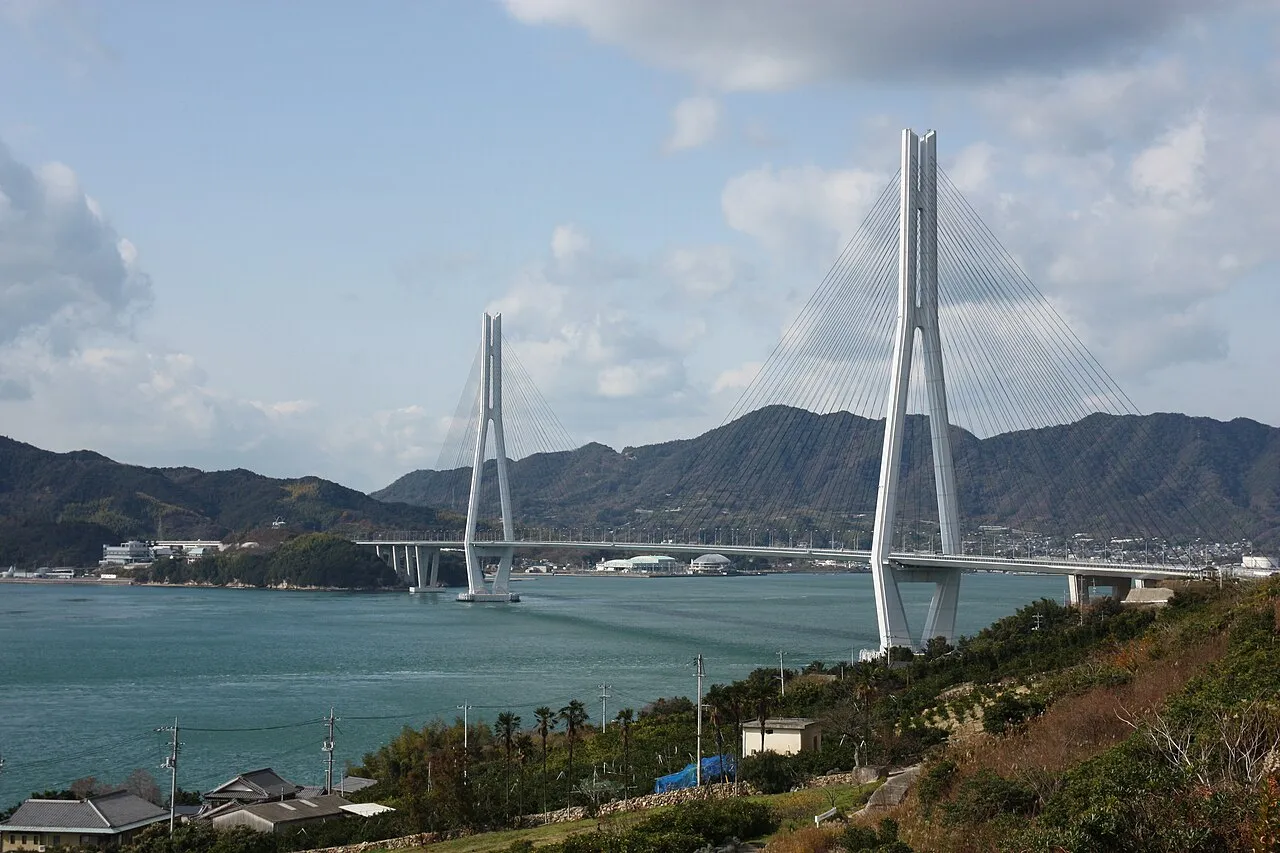
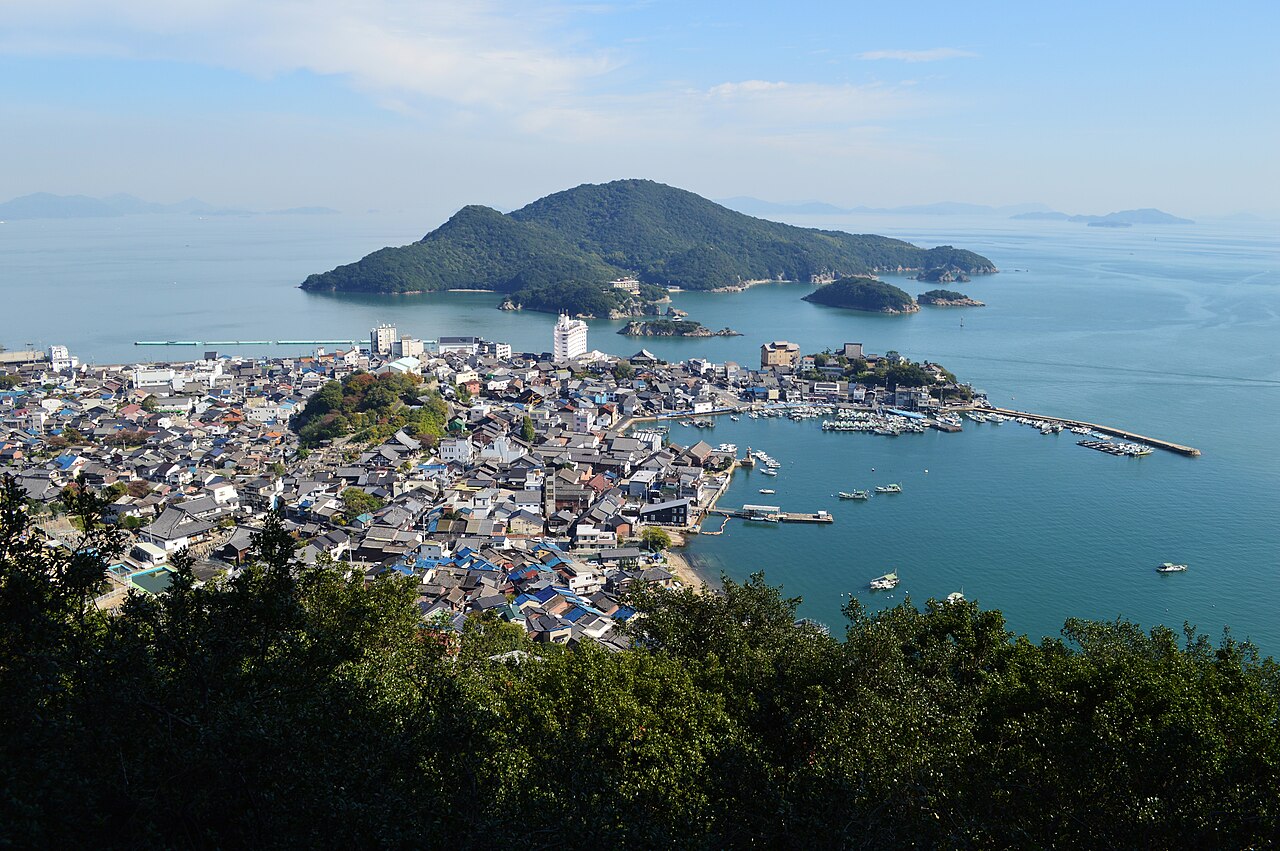
Late in the morning, head east on Route 185 through Kawajiri and cross the light-blue suspension span of Akinada Bridge (3) onto the Akinada Tobishima Kaido. Pause on Shimo-Kamagari Island at Shotoen & Sannose (4) for pine gardens and UNESCO Memory of the World Joseon-embassy scrolls, cross Kamagari Bridge onto Kami-Kamagari Island for local citrus treats at Deai-no-Yakata Kamagari (5) and white-sand views at Kenmin-no-Hama Beach & Kamagari Onsen (6), then island-hop over Toyoshima Bridge and Toyohama Bridge to the Mitarai Preservation District & Rekishi-no-Mieru-Oka Park (7) at the eastern tip of Osaki-Shimojima. Leave the car at the free seaside car park to walk past Edo- and early-Showa merchant houses, stone breakwaters and wooden watchtowers, climb or drive up to Rekishi-no-Mieru-Oka Park for the panoramic view over the strait, and retrace the island bridges back across Akinada Bridge to the mainland. Spend the afternoon cruising east along coastal Route 185 (Sazanami Kaido) through Yasuura and Akitsu to Michi-no-Eki Takehara (8) for a stroll through the Takehara Townscape Preservation District, finishing 16 minutes further east at Tadanoumi Port (9) (drivers picking up a car at Hiroshima Airport can reach Michi-no-Eki Takehara in about 21 minutes and run the route in reverse from east to west).
The drive totals about 118 km, with around 2 hours 50 minutes of pure driving time. Distance and duration are calculated from map data and exclude traffic, museum visits, walking and ferry crossings. On surface roads, the only toll on the entire route is Akinada Bridge (¥730 one-way for ordinary cars, ¥570 for kei cars—with a free return ticket available through Kure City's tourist scheme).
Akinada Bridge cash-only toll, free return ticket scheme and the Okamurajima dead-end
Akinada Bridge Toll Road does not accept ETC cards, credit cards or electronic money—payment is strictly cash or paper coupon tickets only. The single toll plaza stands on the mainland (Kawajiri) side: you pay before crossing onto Shimo-Kamagari Island outbound, and after crossing off the bridge inbound (ordinary car ¥730 one-way, kei car and motorcycle over 125 cc ¥570, moped 125 cc or under ¥50, bicycles and pedestrians free). All six subsequent bridges along the Akinada Tobishima Kaido—Kamagari Bridge, Toyoshima Bridge, Toyohama Bridge, Heira Bridge, Nakanoseto Bridge and Okamura Bridge—are completely toll-free.
Tourists driving an ordinary car or kei vehicle (including motorcycles over 125 cc) who pay cash outbound can get their return bridge crossing free year-round under Kure City's Akinada Bridge Return Ticket Subsidy Scheme. Follow four exact steps: (1) Pay cash at the outbound toll booth and ask the attendant for a toll receipt (通行領収書). (2) Spend at least ¥1,000 in total (combining two or more receipts is permitted) at participating island shops, cafés or museums, and ask staff to stamp your purchase receipt with the designated facility confirmation stamp (if paying by QR/cashless app without a printed slip, ask for a stamped handwritten receipt). (3) Take both the outbound bridge toll receipt and your stamped purchase receipt(s) to an official island exchange counter (交付施設)—such as Shotoen (9:00–17:00, closed Tue), Deai-no-Yakata Kamagari (9:30–17:00, open daily), Kenmin-no-Hama Kagayaki-no-Yakata (8:00–18:00, open daily) or Mitarai Rest House (10:00–16:30 weekdays, 9:00–16:30 weekends/holidays, closed Tue)—to receive one free return coupon ticket (original receipts are retained). (4) Hand the coupon ticket to the attendant at the toll booth on your way back. Crucially, the Akinada Bridge toll booth itself cannot exchange receipts for a free ticket—you must swap them at an island counter before it closes. Also remember that after the seventh bridge (Okamura Bridge), Okamurajima Island (in Imabari, Ehime) has no road bridge onward to Shikoku mainland or the Shimanami Kaido, so rental-car drivers return via Akinada Bridge.
Yamato Museum 2026 reopening and parking in Kure, Mitarai, Takehara and Tadanoumi Port
Yamato Museum completed its 2025–2026 renewal closure and reopened on 23 April 2026 (9:00–18:00, last gallery entry 17:30; closed Tuesdays, or the next day if a holiday, and open daily during Golden Week, summer holidays and 29 December–3 January; updated permanent-exhibition admission is ¥1,000 for adults and university students, ¥300 for high-school students and ¥200 for elementary/junior-high students). The temporary "Yamato Museum Satellite" inside View Port Kure 1F closes permanently on Sunday 20 December 2026 (until then, same-day entry is free when showing a main-museum ticket). Next door, the JMSDF Kure Museum (Tetsu-no-Kujira) opens one hour later at 10:00–18:00 (last entry 17:30; closed Tuesdays and 29 December–3 January; admission free) and has no dedicated car park—use paid bays at Yamato Museum Car Park or Kure Central Pier Car Park, or use Kure Municipal Car Parks (Kure Station West, Kuramoto or Hondori), where museum visitors receive a same-day fee reduction of up to 1 hour (¥200 off stays over 30 minutes). At Alley Karasukojima, roadside stopping on Route 487 is prohibited; pull into the dedicated Alley Karasukojima Car Park (28 free ordinary-car spaces, open 8:00–20:00).
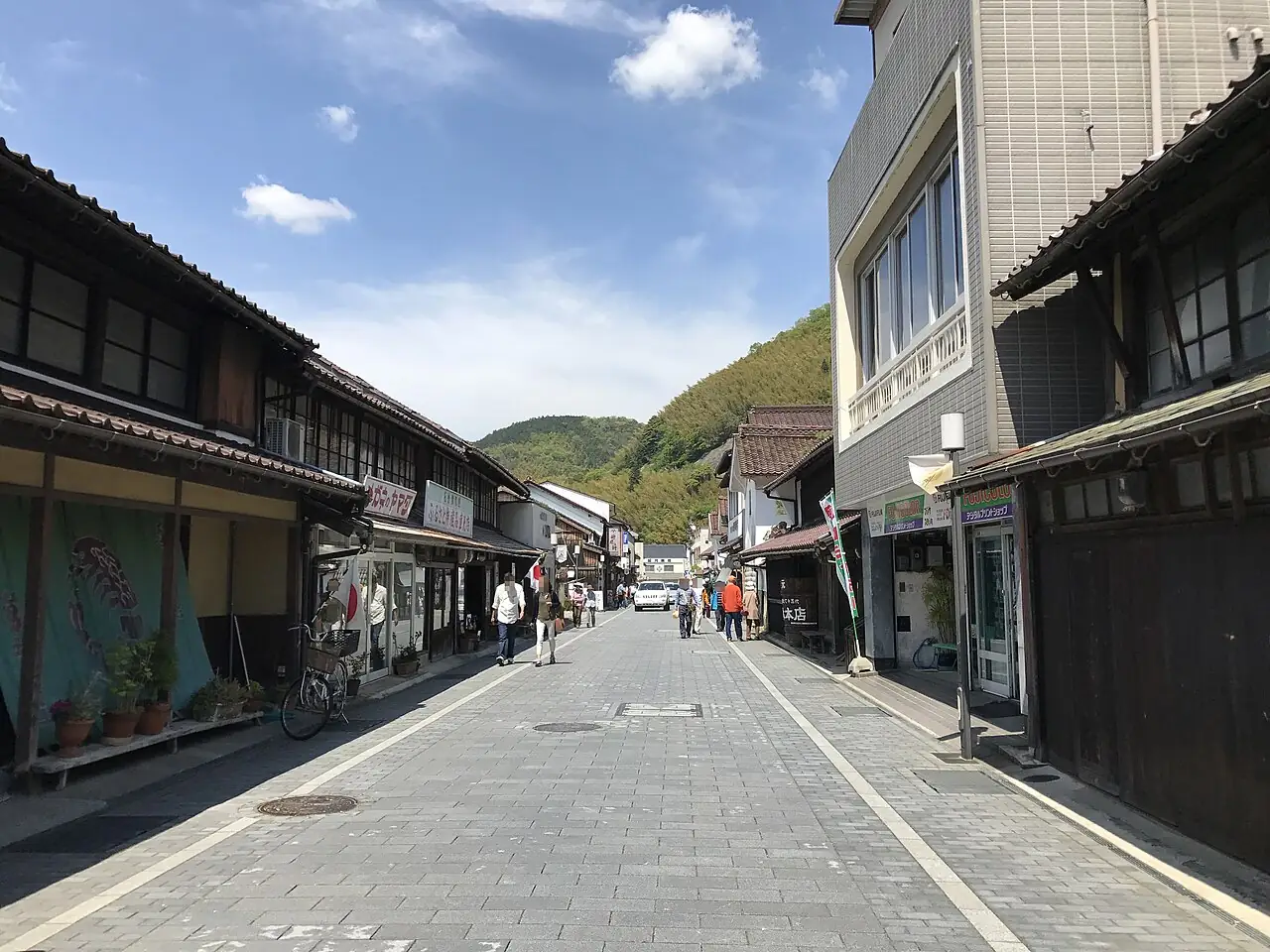
Both the Mitarai Preservation District on Osaki-Shimojima and the Takehara Townscape Preservation District consist of narrow historic residential lanes where rental cars should not enter. At Mitarai, park on the harbourfront at Mitarai Municipal Car Park (20 spaces, free) or up at Rekishi-no-Mieru-Oka Park (about 10 spaces, free); note that if detouring to Jumonjiyama Park Observatory on Toyoshima Island (7 free spaces), Kure City warns that the summit access road is very narrow with seasonal overhanging brush, so less confident drivers should stay on the main coastal road. In Takehara, park at Michi-no-Eki Takehara (48 free ordinary-car spaces, a 3–6 minute walk to the preserved streets) or Shinmachi Municipal Car Park (about 46 spaces, ¥100/hour). Finally, private vehicles are prohibited in principle inside Okunoshima (Rabbit Island): day-trip drivers park free at Tadanoumi Port Public Parking (about 160 spaces across Lot 1 [~55], Lot 2 [~60] and the sports-ground overflow lot [~45]) and board as foot passengers (15 minutes, ¥360 one-way adult; load your car onto the Omishima Ferry only if crossing straight through to Mori Port on Omishima to join the Shimanami Kaido).
Roads you can drive
| Road | What to expect | Length and cost | Hours and restrictions |
|---|---|---|---|
| Akinada Bridge Toll Road + Akinada Tobishima Kaido (7-bridge island route) | Coastal island chain linking Kure (Kawajiri) across Shimo-Kamagari, Kami-Kamagari, Toyoshima, Osaki-Shimojima, Heirajima and Nakanoshima to Okamurajima | About 27 km one-way from Akinada Bridge to Mitarai. Akinada Bridge: ordinary car ¥730, kei car ¥570 one-way (cash only—no ETC or cards; free return ticket with ¥1,000+ island spend). Other 6 bridges free | Open year-round. Closed to two-wheelers/pedestrians at 10-min mean wind ≥15 m/s and to all vehicles at ≥25 m/s. No road bridge beyond Okamurajima to Shikoku or Shimanami Kaido |
| National Route 185 (Sazanami Kaido) | Calm 2-lane Seto Inland Sea shoreline highway linking Kure, Kawajiri, Yasuura, Akitsu, Takehara, Tadanoumi and Mihara alongside the JR Kure Line | About 58 km from central Kure to Tadanoumi Port; toll-free | Open year-round; direct access to Michi-no-Eki Takehara and Tadanoumi Port |
| Hiroshima-Kure Road (Claire Line / Route 31 Bypass) | NEXCO West expressway linking Hiroshima Expressway Route 3 (Niho JCT) directly to Kure IC | About 15.9 km (Niho JCT–Kure IC); tolled (ETC accepted) | Open year-round; features long two-way single-carriageway tunnel sections—watch speed and following distance |
| Higashi-Hiroshima Kure Expressway (Route 375 Bypass) | High-standard expressway linking Sanyo Expressway Takaya JCT south to Aga IC in Kure | About 32.8 km; completely toll-free | Open year-round; fastest toll-free expressway link between Hiroshima Airport / Sanyo Expressway and Kure or Akinada Bridge |
| National Route 487 (Alley Karasukojima & Ondo Bridge) | Harbourfront road passing former naval brick warehouses and submarine berths south to crimson Ondo Bridge | About 6.5 km from Yamato Museum to Ondo-no-Seto Park; toll-free | Open year-round; no street parking along Alley Karasukojima (free off-street lot open 8:00–20:00) |
Places to stop
Harbour, islands and views
Numbers match the map.
| No. | Place | Parking | What to know |
|---|---|---|---|
| 1 | Yamato Museum & JMSDF Kure Museum (Kure Central Pier) | Paid bays at Yamato Museum Car Park & Central Pier Car Park (1-hour fee reduction at Kure Station West, Kuramoto & Hondori municipal car parks) | Yamato Museum reopened 23 April 2026 (9:00–18:00, last entry 17:30, closed Tue; adults ¥1,000, high school ¥300, child ¥200; temporary Satellite closes 20 December 2026). JMSDF Kure Museum next door opens 10:00–18:00 (last entry 17:30, closed Tue & 29 Dec–3 Jan; free admission, no dedicated parking) |
| 2 | Alley Karasukojima | Alley Karasukojima Car Park: 28 ordinary spaces + 10 bus spaces (free, 8:00–20:00) | Promenade facing active JMSDF submarines and escort vessels moored just offshore, alongside a historic torpedo-loading crane and red-brick arsenal warehouses (free to walk) |
| 3 | Akinada Bridge (Tobishima Kaido Gateway) | Viewpoint pull-offs on Shimo-Kamagari Island side | 1,175 m suspension bridge linking the mainland to Shimo-Kamagari. Mainland toll booth is cash/coupon only (no ETC; ordinary car ¥730, kei car ¥570)—collect your outbound toll receipt for the free return ticket scheme |
| 4 | Shotoen & Sannose (Shimo-Kamagari Island) | About 50 free spaces in front of Shimo-Kamagari Citizen Center | Seaside pine garden housing four heritage pavilions including UNESCO Memory of the World Joseon diplomatic scrolls and Old Imari porcelain. Open 9:00–17:00 (last entry 16:30), closed Tue (next day if holiday), adults ¥800. Official return-ticket exchange counter |
| 5 | Deai-no-Yakata Kamagari (Kamagari Bridge) | About 40 spaces (free) | Hilltop island shop, diner and tourist desk immediately across Kamagari Bridge on Kami-Kamagari Island. Open daily year-round 9:30–17:00, making it the handiest daily exchange counter for Akinada Bridge return tickets |
| 6 | Kenmin-no-Hama Beach & Kamagari Onsen | Free resort parking (including 7 spaces at Yasuragi-no-Yakata) | 400 m white-sand Seto Inland Sea beach. Kagayaki-no-Yakata exchanges Akinada Bridge return tickets daily 8:00–18:00; Kamagari Onsen Yasuragi-no-Yakata offers radon hot-spring day baths 15:00–20:00 (last entry 19:00, closed Tue except holidays; adults ¥600, elementary ¥500) |
| 7 | Mitarai Preservation District & Rekishi-no-Mieru-Oka Park | Mitarai Car Park: 20 spaces (free) / Rekishi-no-Mieru-Oka Park: about 10 spaces (free) | Preserved Edo-to-Showa port town of merchant houses, stone wharves and high lanterns, plus the hilltop park overlooking Kurushima Strait (free). Mitarai Rest House (10:00–16:30 wkdy, 9:00–16:30 wknd/hol, closed Tue & 29 Dec–3 Jan) exchanges bridge return tickets |
| 9 | Tadanoumi Port (Okunoshima Ferry & Public Parking) | Tadanoumi Port Public Parking: about 160 free spaces (Lot 1 ~55, Lot 2 ~60, overflow lot ~45) | Departure pier for 15-minute boats to Okunoshima / Rabbit Island (adults ¥360 one-way, ¥720 return). Leave rental cars in the free port lots as private cars are prohibited on Okunoshima in principle (through car ferry to Omishima Mori Port: ¥2,640 one-way for 4–5 m cars) |
| 10 | Ondo-no-Seto Park (Ondo Bridge) | About 190 spaces (free) | Optional 10-minute detour south of Alley Karasukojima overlooking the narrow Ondo Strait and crimson spiral approaches of Ondo Bridge; famous for ~2,300 cherry trees in late March–early April and ~8,300 azaleas in late April–early May |
Roadside stations
| No. | Roadside station | Parking | What to know |
|---|---|---|---|
| 8 | Michi-no-Eki Takehara | 48 ordinary spaces (3 disabled) + 4 large spaces (free) | Right at the gateway to Takehara Townscape Preservation District (3–6 min walk). Shop and tourist desk open 9:00–17:00, closed 3rd Wednesdays (next day if holiday) and 31 Dec–3 Jan (overflow paid parking at Shinmachi Municipal Car Park: 46 spaces, ¥100/hr). Toilets & EV charger on site; no fuel station |
| 11 | Michi-no-Eki Mihara Shinmei-no-Sato | 100 ordinary spaces (2 disabled) + 17 large spaces (free) | Optional eastern finish 23 minutes east of Tadanoumi Port on the Route 2 Mihara Bypass, with sweeping terrace views over the Mihara Seto islands and local octopus dishes. Open 9:00–18:00, closed 3rd Tuesdays. 24-hour toilets & EV quick charger; no fuel station |
Best seasons and crowds
| Season | Highlights and cautions |
|---|---|
| Late March–early May | Cherry blossoms (late March–early April) and azaleas (late April–early May) at Ondo-no-Seto Park, with mild spring island breezes. During Golden Week, Yamato Museum (open daily 29 April–5 May) and Tadanoumi Port's free lots fill early in the morning |
| Mid-May–September | Swimming and sea kayaking at Kenmin-no-Hama and vivid blue Seto Inland Sea views. Yamato Museum opens daily throughout 21 July–31 August. Watch JMA wind forecasts during typhoons—Akinada Bridge closes to all vehicles at 10-min mean wind ≥25 m/s |
| October–November | Crisp visibility across the strait to the Shikoku mountains and autumn citrus harvests on Osaki-Shimojima. Late October's Takehara Bamboo Candlelight Festival (Shokei-no-Michi) draws heavy evening crowds around Takehara's historic streets |
| December–March | One of western Japan's mildest winter coastal drives—snow and ice are rare along Kure, the Tobishima islands and Route 185, allowing comfortable year-round driving (note that inland higher ground around Hiroshima Airport and the Higashi-Hiroshima Kure Expressway can see early-morning frost during cold snaps) |
On 14 November 2026, sunrise in Hiroshima is at 6:42 and sunset is at 17:07. Because Mitarai Rest House finishes exchanging Akinada Bridge return tickets at 16:30 and coastal twilight settles shortly after 17:00, aim to start your return drive from Mitarai by around 15:45–16:00.
Closures, suspensions and traffic restrictions checked on 14 November 2026
- Akinada Bridge Toll Road, all six toll-free bridges of the Akinada Tobishima Kaido, and National Route 185 have no active roadwork closures as of 14 November 2026 (high-wind closures apply on Akinada Bridge at 10-minute mean wind speeds of ≥15 m/s for two-wheelers/pedestrians and ≥25 m/s for all vehicles).
- Yamato Museum's main building reopened after renovation on 23 April 2026 and operates on its regular schedule (closed Tuesdays). The temporary "Yamato Museum Satellite" at View Port Kure 1F closes permanently on Sunday 20 December 2026.
- The JMSDF Kure Museum (Tetsu-no-Kujira) is closed on Tuesdays (4, 10, 17 and 24 November 2026) and from 29 December to 3 January (whereas Yamato Museum's main building remains open over 29 December–3 January).
- Around the Takehara Townscape Preservation District, water-main roadworks close designated perimeter lanes to vehicles from 8:30 to 17:00 daily on Monday 16 November through Friday 20 November 2026 (pedestrian access and all historic houses/shops remain open as normal; drivers should park at Michi-no-Eki Takehara or Shinmachi Municipal Car Park).
Getting there and fuel
| Starting point | Approximate drive |
|---|---|
| JR Hiroshima Station / Central Hiroshima | Via Hiroshima Expressway Route 3 and Hiroshima-Kure Road (Claire Line) Kure IC: about 24 km and 25–30 minutes to Yamato Museum, and about 35 km and 45 minutes to Akinada Bridge |
| Hiroshima Airport (HIJ) | South via Prefectural Roads / Route 432: about 16.4 km and 20–25 minutes to Michi-no-Eki Takehara, and about 18 km and 25–30 minutes to Tadanoumi Port. To Kure Harbour (Yamato Museum): about 52 km and 50–55 minutes via Sanyo Expressway and the toll-free Higashi-Hiroshima Kure Expressway |
| Sanyo Expressway (Kawauchi IC, Hongo IC & Takaya JCT) | About 20 minutes from Kawauchi IC to Michi-no-Eki Takehara; about 25 minutes from Hongo IC to Tadanoumi Port; about 35–40 minutes from Takaya JCT via the toll-free Higashi-Hiroshima Kure Expressway (Aga IC) to Kure or Akinada Bridge |
| JR Kure Station (JR Kure Line) | About 2 minutes by car (5 minutes on foot via the elevated walkway) to Yamato Museum & Tetsu-no-Kujira, about 8 minutes to Alley Karasukojima, and about 14.4 km and 23 minutes to Akinada Bridge |
| JR Mihara Station (Sanyo Shinkansen / JR Kure Line) | West on Route 185: about 5 minutes to Michi-no-Eki Mihara Shinmei-no-Sato, about 17 km and 20–25 minutes to Tadanoumi Port, and about 35 minutes to Michi-no-Eki Takehara |
Petrol stations on the Akinada Tobishima Kaido islands are sparse, close early in the evening and often shut on Sundays—always fill up in central Kure or along Route 185 in Kawajiri before crossing Akinada Bridge. Neither Michi-no-Eki Takehara nor Michi-no-Eki Mihara Shinmei-no-Sato has an on-site petrol station, though urban Route 185 and Route 2 in Takehara and Mihara have plenty of stations. EV drivers can charge at Michi-no-Eki Takehara and Michi-no-Eki Mihara Shinmei-no-Sato, whereas rapid chargers are scarce across the Tobishima islands, so top up on the mainland before crossing.
If you don't have a car
Arriving by Shinkansen at Hiroshima Station to start from the Kure side, compare walk-up counters at the Shinkansen (North) and South exits in Hiroshima Station Car Rental: Branches Compared. Flying into Hiroshima Airport—just 20 minutes north of Takehara—check terminal shuttles and counter hours in Hiroshima Airport Car Rental. For a broader look at pickup bases across the prefecture, see our Hiroshima Car Rental Guide and browse branches in the Hiroshima car rental directory. Expressways such as the Claire Line and Sanyo Expressway use ETC—see ETC Cards for Rental Cars in Japan (while keeping ¥1,000+ in coins/notes ready for cash-only Akinada Bridge)—and if dropping off at a different hub such as Fukuyama, Okayama or Matsuyama, check One-Way Car Rental in Japan, driving in Japan on a foreign licence and airport car rental pickup and return.
Frequently asked questions
Has Yamato Museum in Kure reopened after its renovation?
Yes. Following its renewal closure from February 2025, Yamato Museum reopened on 23 April 2026. It opens 9:00–18:00 (last gallery entry 17:30), closes on Tuesdays (or the next day if a public holiday, with daily opening during Golden Week, summer holidays and 29 December–3 January), and charges ¥1,000 for adults/university students, ¥300 for high-school students and ¥200 for elementary/junior-high students. The temporary Yamato Museum Satellite closes permanently on 20 December 2026.
Can I use ETC or a credit card on Akinada Bridge, and how do I get the free return ticket?
No—Akinada Bridge accepts cash or coupon tickets only (no ETC, credit cards or e-money; ¥730 one-way for ordinary cars, ¥570 for kei cars, and the remaining six island bridges are free). Pay cash outbound and ask for a toll receipt, spend ¥1,000 or more at participating island venues with a confirmation stamp, and swap both at an island exchange counter (such as Shotoen, Deai-no-Yakata Kamagari, Kenmin-no-Hama Kagayaki-no-Yakata or Mitarai Rest House) before closing time to receive a free return ticket. You cannot exchange receipts at the toll booth itself.
Can I drive straight from the Akinada Tobishima Kaido onto Shikoku or the Shimanami Kaido?
Not by bridge alone. The seventh and final bridge (Okamura Bridge) ends on Okamurajima Island (Imabari, Ehime), which has no road bridge onward to Shikoku mainland or the Shimanami Kaido, so rental cars turn back across Akinada Bridge. To continue onto the Shimanami Kaido with your car, either return to the mainland and drive east on Route 185 to Tadanoumi Port to board the Omishima Ferry car ferry to Mori Port on Omishima, or join the Shimanami Kaido at Onomichi (Nishi-Seto Onomichi IC).
Should I take my rental car onto the ferry to Okunoshima (Rabbit Island)?
No—leave your car at Tadanoumi Port. Private vehicles are prohibited inside Okunoshima in principle unless arranged in advance with Kyukamura Ohkunoshima. Park in Tadanoumi Port's free public car parks (about 160 spaces across Lots 1, 2 and the overflow lot) and board as a foot passenger (¥360 one-way adult, about 15 minutes).
What is the best one-day driving order and time for Kure, Tobishima Kaido and Takehara?
Starting from Hiroshima Station, follow "Yamato Museum & JMSDF Kure Museum → Alley Karasukojima → Akinada Bridge → Shimo-Kamagari & Kami-Kamagari → Mitarai & Rekishi-no-Mieru-Oka Park → back across Akinada Bridge → Route 185 Sazanami Kaido → Michi-no-Eki Takehara (Historic District) → Tadanoumi Port" (about 118 km and 2 hours 50 minutes of driving). Starting from Hiroshima Airport—only 20–30 minutes from Takehara and Tadanoumi Port—simply run the exact route in reverse from east to west.
Nearby areas and guides
- Shimanami Kaido driving guide: island-hopping from Onomichi to Imabari
- Hagi and Tsuwano driving guide: castle town, samurai lanes and Sea of Japan coast
- Izumo and Matsue driving guide: Izumo Taisha, Cape Hinomisaki, Matsue Castle and Lake Shinji
- Hiroshima Car Rental Guide: Station, Airport & Island Bases
- Hiroshima driving and travel guide
Sources & photo creditsLast verified 2026-11-14
- Hiroshima Prefectural Road Public Corporation: Akinada Bridge toll schedule (official page, in Japanese) · 2026-11-14
- Hiroshima Prefectural Road Public Corporation: Akinada Bridge payment rules (official page, in Japanese) · 2026-11-14
- Hiroshima Prefectural Road Public Corporation: Traffic and wind restrictions (official page, in Japanese) · 2026-11-14
- Hiroshima Prefectural Road Public Corporation: Akinada Tobishima Kaido 7-bridge guide (official page, in Japanese) · 2026-11-14
- Hiroshima Prefectural Road Public Corporation: Akinada Bridge overview (official page, in Japanese) · 2026-11-14
- Kure City: Akinada Bridge return toll ticket subsidy scheme (official page, in Japanese) · 2026-11-14
- Kure-Trip Official Tourism: Akinada Bridge return ticket exchange counters (official page, in Japanese) · 2026-11-14
- Yamato Museum (Kure Maritime Museum): Official website · 2026-11-14
- Yamato Museum: Notice on closing of Yamato Museum Satellite (official page, in Japanese) · 2026-11-14
- Yamato Museum: Municipal car park fee reduction notice (official page, in Japanese) · 2026-11-14
- JMSDF Kure Museum (Tetsu-no-Kujira): Visitor guide (official page, in Japanese) · 2026-11-14
- JMSDF Kure Museum: Official English page · 2026-11-14
- Kure-Trip Official Tourism: Yamato Museum (in Japanese) · 2026-11-14
- Kure-Trip Official Tourism: JMSDF Kure Museum (in Japanese) · 2026-11-14
- Kure-Trip Official Tourism: Alley Karasukojima (in Japanese) · 2026-11-14
- Kure-Trip Official Tourism: Ondo-no-Seto Park (in Japanese) · 2026-11-14
- Kure-Trip Official Tourism: Akinada Bridge (in Japanese) · 2026-11-14
- Kure-Trip Official Tourism: Shotoen (in Japanese) · 2026-11-14
- Ranto Cultural Promotion Foundation: Shotoen access and parking (official page, in Japanese) · 2026-11-14
- Kure-Trip Official Tourism: Deai-no-Yakata Kamagari (in Japanese) · 2026-11-14
- Hiroshima Prefectural Kenmin-no-Hama: Kamagari Onsen Yasuragi-no-Yakata (official page, in Japanese) · 2026-11-14
- Kure-Trip Official Tourism: Jumonjiyama Park Observatory (in Japanese) · 2026-11-14
- Kure-Trip Official Tourism: Mitarai Preservation District (in Japanese) · 2026-11-14
- Kure-Trip Official Tourism: Rekishi-no-Mieru-Oka Park (in Japanese) · 2026-11-14
- Kure-Trip Official Tourism: Mitarai Rest House (in Japanese) · 2026-11-14
- NEXCO West Japan: Hiroshima-Kure Road (Claire Line) (official page, in Japanese) · 2026-11-14
- MLIT Hiroshima National Highway Office: Higashi-Hiroshima Kure Expressway (official page, in Japanese) · 2026-11-14
- National Michi-no-Eki Liaison Association: Michi-no-Eki Takehara (official page, in Japanese) · 2026-11-14
- Michi-no-Eki Takehara: Official website (in Japanese) · 2026-11-14
- Takehara Tourism Navigation: Takehara Townscape Preservation District (official page, in Japanese) · 2026-11-14
- Takehara Tourism Navigation: Parking and rental car information (official page, in Japanese) · 2026-11-14
- Takehara Tourism Navigation: Tadanoumi Port public parking map PDF (January 2026, in Japanese) · 2026-11-14
- Takehara Tourism Navigation: Waterworks road closure notice around Historic District (official page, in Japanese) · 2026-11-14
- Takehara City: Sightseeing facilities and Shinmachi Municipal Car Park (official page, in Japanese) · 2026-11-14
- Omishima Ferry: Tadanoumi – Okunoshima – Mori timetable (official page, in Japanese) · 2026-11-14
- Omishima Ferry: Passenger and vehicle fares (official page, in Japanese) · 2026-11-14
- Kyukamura Ohkunoshima: Access guide (official page, in Japanese) · 2026-11-14
- National Michi-no-Eki Liaison Association: Michi-no-Eki Mihara Shinmei-no-Sato (official page, in Japanese) · 2026-11-14
- Michi-no-Eki Mihara Shinmei-no-Sato: Official website (in Japanese) · 2026-11-14
- National Astronomical Observatory of Japan: Hiroshima sunrise and sunset, November 2026 (in Japanese) · 2026-11-14
- Japan Meteorological Agency: Hiroshima weather forecast · 2026-11-14
- OpenStreetMap (map positions and route; © OpenStreetMap contributors, ODbL; route calculated with OSRM) · 2026-11-14
- Port town of Mitarai (Important Preservation District for Groups of Traditional Buildings) and the Seto Inland Sea strait on Osaki-Shimojima in Kure, Hiroshima Prefecture (photographed August 2013) · Photographed 2013-08-04 · At by At · Source · CC BY-SA 3.0